
Most of your product is table stakes. The rest is the business.
A founder spent four months shipping features his prospects already expected. The demo was smooth. The feedback was devastating: 'nothing differentiates you.' Points of parity vs points of difference, and the research that tells them apart.
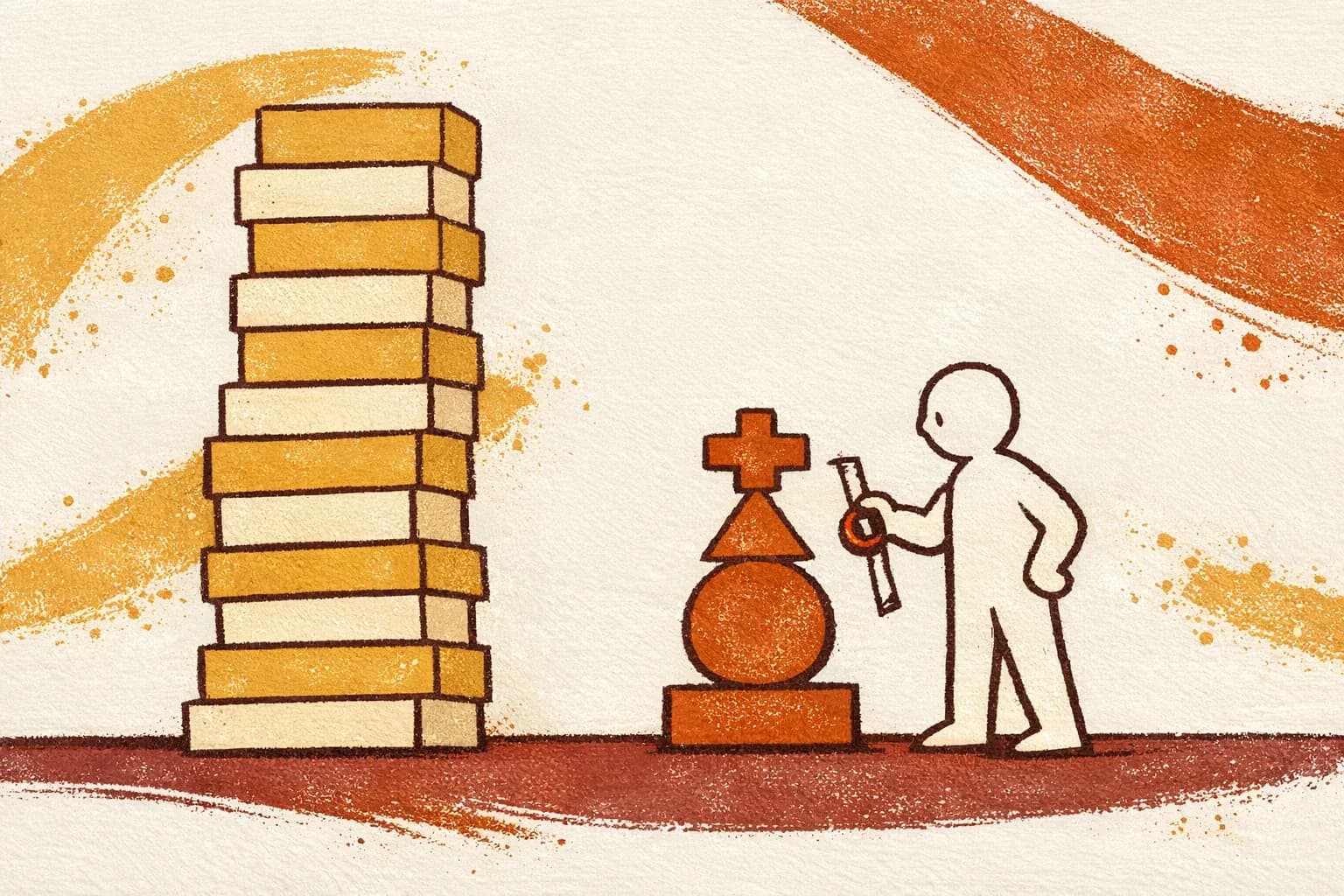
A founder I advise spent four months building features before his first paid sale last year. He had login, SSO, role-based permissions, two-factor auth, audit logs, API access, webhook support, SOC 2 scaffolding, and a settings page deep enough to have sub-settings. The demo was a smooth thirty-minute tour. The feedback from the first three buyers was the same sentence in slightly different words: 'this is fine, but what makes you different from [competitor]?' He could not answer the question. He had spent four months building the thing that did not differentiate him.
Most of a B2B product at the pre-seed stage is table stakes. The market already expects it. If you do not have it, you are invisible. If you do have it, you are not preferred for it. Kevin Keller called this a point of parity: the minimum feature set that qualifies you for category consideration. The business does not live there. The business lives in the small set of features that nobody else has, which Keller called points of difference. Most founders get the ratio backwards.
Why table stakes feel like features
Founders build table stakes because the work is legible. Login. Permissions. Audit logs. Each ticket has a clean spec, a known acceptance criterion, and a satisfying ship. You can watch the sprint board fill up and feel productive. Points of difference are harder. They require you to make a claim the market has not yet validated. There is no template to copy. The work is smaller but the exposure is higher, and founder psychology rarely walks toward exposure when there is a backlog of comfortable tickets nearby.
The result is a product that demos cleanly and pitches poorly. Every feature works. None of them separate you. Your prospects compare you to three alternatives on a spreadsheet and pick whichever is fastest to buy or cheapest to keep. You have competed on nothing differentiable, which means you have competed on price.
Points of parity
- Login, SSO, role-based access
- Audit logs, SOC 2 scaffolding
- API, webhooks, standard integrations
- Dashboards and analytics baseline
- Pricing page, onboarding flow
- The reasons your prospects consider you
Points of difference
- The feature competitors have not copied
- The integration only you offer
- The workflow only your ICP values
- The edge case the incumbent ignores
- The claim you can defend with specific proof
- The reason your prospects choose you
80% of a pre-seed roadmap is the left column. The business lives in the right column. Founders burn months because the ratio feels inverted from inside the building.
The research that tells them apart
You cannot tell a point of parity from a point of difference by looking at your own roadmap. You have to look outward first. The research has four steps and takes about a week to run well.
- Map the category. List every competitor, adjacent product, and near-analogue your prospects compare you to. Include three that are older than you and three that are younger; age cohorts reveal where the category is headed.
- Audit parity. Walk each competitor's marketing site and G2 page. List every feature they claim. The features appearing on more than half your competitors are points of parity. You need them to be considered. You will not win on them.
- Look for absences. Features that appear on one competitor but not others are either that competitor's point of difference or a failed experiment. Investigate which. Absences are where your differentiation research starts.
- Interview five prospects. Not asking what they want, asking what they settled for. 'What does [competitor] not do well?' 'What do you wish you could change about it?' The gap between stated want and observed use is where points of difference live.
Inspiration research sits outside the category and helps too. Software patterns from adjacent industries. UX decisions from consumer apps. Pricing structures from services businesses. Linear borrowed its keyboard-shortcut philosophy from a decade of developer tools. Stripe borrowed its documentation style from academic papers. The best points of difference rarely come from inside your category; they come from watching what works somewhere else and being the first to import it.
What to do with the list
After the research you have three columns. A table-stakes column (points of parity) you must build or acquire. A features-nobody-has column (candidate points of difference) you must test with prospects before betting on. And a should-probably-drop column: features you have already built that the market does not value and competitors do not copy. The ratio most founders discover after their first audit is that 60% to 80% of their roadmap is column one. The business in the company lives in column two.
At Accenture I ran competitive scans at enterprise scale: telecommunications, mining, energy, where the parity layer alone ran into hundreds of features and the points of difference often lived in compliance nuance or integration depth. The ratio held. Roughly 80% parity, 20% difference. The 20% was what the Tier-1 buyer paid a premium for. At my own ventures, MedClear and MVP Guru, the numbers shifted but the principle did not. Most of what we built was expected. The business in each case was the handful of features where I could say 'we are the only ones who do this, and here is why it matters for the work you are actually doing'.
The diagnostic, before you ship another feature
Write the feature name on a card. On the back, answer three questions. One: do at least half of my direct competitors have this feature? If yes, it is a point of parity. Build it if consideration requires it and then stop optimising. Two: do any of my prospects choose a competitor over me because the competitor has this and I do not? If yes, it is an urgent point of parity. Ship it and move on. Three: if I did not build this, would my target prospect still buy? If yes, the feature is probably decoration and can wait.
Your first five hires will want to build points of parity because points of parity are what they have shipped before. The founder job is to protect the 20% of the roadmap that is the whole business. That protection is almost never a build decision. It is a research decision, made before the ticket gets written.
Most of your product is what competitors already do. The business is the two or three things they do not. The research is what tells you which is which, before you have spent four months finding out.
Template from this essay
Points of parity vs difference — audit worksheet
A three-column worksheet to separate table-stakes features from your actual business. Most pre-seed roadmaps are 80% left column and 20% right column — the audit makes the ratio visible.
Found this useful?
Thirty minutes. Free. No prep needed.
If the diagnosis is clear without me, you go do it. If not, we talk about the sprint. Either way, the first call takes 30 minutes and costs nothing.
Book the callKeep reading
All posts
Some users forgive broken things. Others leave.
A founder shipped a rough beta to technical ops leaders and got 15 bug reports in a week. Another shipped the same category of product to regional facility managers and got silence. Your audience's tolerance for half-built is an industry variable, not a B2B/B2C one.
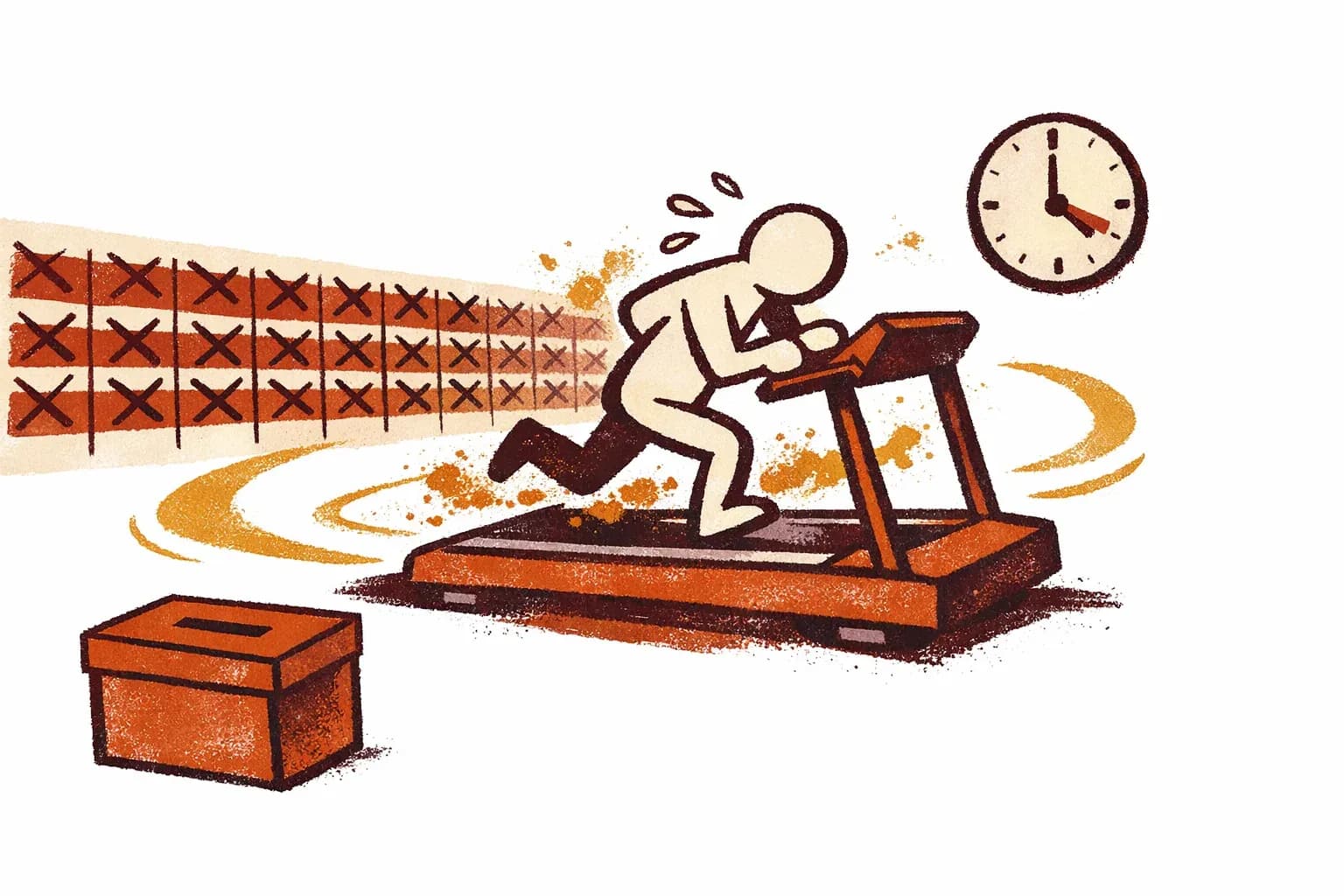
Busy is the enemy of progress
A seed founder showed me a sprint board with 147 closed tickets and a revenue line that hadn't moved in four months. Activity and progress feel identical from the inside. The bank doesn't agree.

The week you should have stopped building
Pre-Series-A companies usually have either a distribution problem or a product problem. Rarely both. The one you don't have is the one you keep working on.