
The first ten customers are research, not revenue
A founder I worked with had three paying customers, a twelve-dollar average revenue per user, and a plan to spend the next eight weeks on growth. The dollar number was a distraction. The first ten customers are research; the dollar is a side effect of the research being honest.
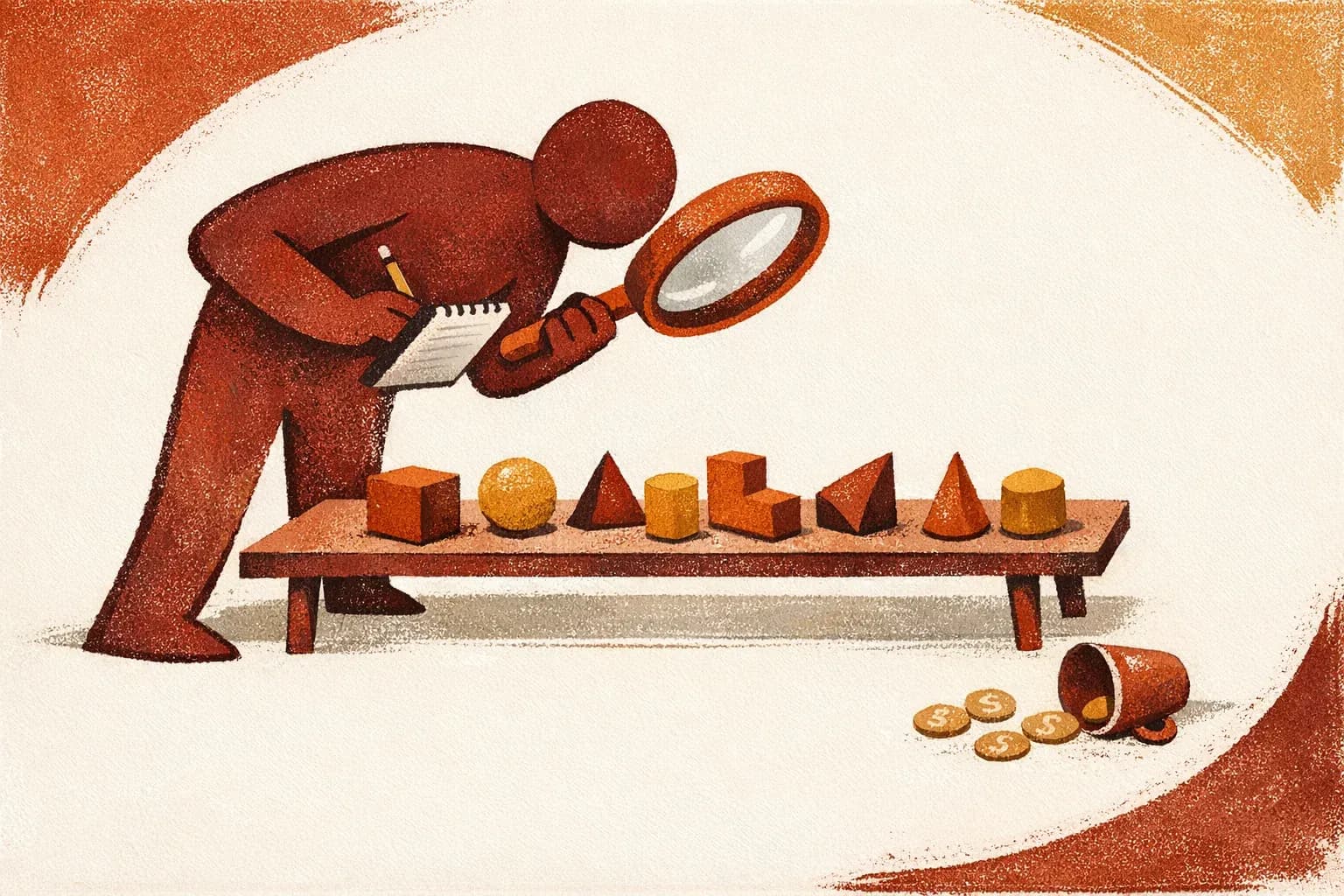
A founder I work with had three paying customers, a twelve-dollar average revenue per user, and a plan to spend the next eight weeks on growth. He had built a dashboard. He had a HubSpot pipeline. He had a Notion doc with the LinkedIn search filters that had landed his last two demos. He was, by every visible measure, ready to scale.
When I asked him what he had learned from the three customers, he said "they like the product." When I asked what he had learned from the people who had not bought, he said he had not yet asked them. When I asked what the three paying customers had in common, he gave me an answer that did not actually distinguish them from the people who had churned.
He was not failing at growth. He was succeeding at the wrong activity. The first ten customers are research, not revenue. The dollar number is a side effect of the research being honest.
Why the dollar number is a distraction below ten
At ten paying customers, your monthly revenue is a noisy signal. Two cancellations move it twenty percent. One enterprise lead at three times the average ARPU swings the chart. The number tells you almost nothing about whether the product is working, the price is right, or the audience is real.
What the dollar does is feel like progress. The founder who has gone from $0 to $400 of MRR has crossed a psychologically meaningful line, and the line is real. But the line is about the founder, not the company. The company is in the same place it was at $0 — testing whether a specific shape of buyer will pay for a specific shape of product.
Treating the first ten customers as revenue means optimising for the next dollar. The next dollar is in the easier customer, the easier vertical, the easier feature. The easier customer is rarely the right customer. By the time the founder has thirty customers and a real ARPU, the product is shaped for the easier customer and the right customer no longer fits.
Information per customer
The information-per-customer ratio collapses fast as the count grows. Treating the first ten as revenue is treating a research budget like an income statement.
What the first ten customers are actually for
Three things, in this order. None of them are revenue.
1. ICP refinement
Each of the first ten customers either confirms or refines the picture of who the product is for. The picture you started with was a hypothesis; the customers are how the hypothesis gets sharpened. By customer ten, you should be able to write the ICP in two sentences with names attached, not three vertical buckets and a vague firmographic range.
If you cannot, the first ten have been the wrong ten. The fix is not to keep selling. The fix is to interview the ones who churned, the ones who said no, and the ones who hesitated for three weeks before signing.
2. Kill-criteria validation
Every founder runs an implicit kill criterion in the first six months. The customers who fall on the wrong side of it are the ones whose feedback would, if heard honestly, kill the bet. Most founders silence those customers by attributing the negative signal to the customer being wrong about themselves. The first ten customers are the only chance you have to test the kill criterion against actual evidence rather than against your forecast of what the evidence would say.
If the bet survives the first ten honestly, you have a real bet. If the bet only survives by the founder discounting half the signal, you have a problem the next ten customers will sharpen, not solve.
3. Reference loop seeding
The first ten customers are the source of every later sales conversation, whether you intend it or not. If three of them love the product, the warm referrals start. If three of them are quietly disappointed, the warm referrals are negative — they do not happen, and the silence is itself a signal to the next prospect on the call.
Picking the first ten well is therefore disproportionately important. The right ten will refer you into the right next forty. The wrong ten will refer you nowhere, or worse.
What to ask each of the first ten
A thirty-minute conversation, recorded if you can, notes if you cannot. The same five questions every time so you can compare answers across the ten. The customer interview script on the resources page is the structure I use most; below is the abbreviated rationale.
- What tool were you using before this? You learn what category they think you are in.
- When did you last feel confident using a piece of software at work? You learn what good feels like to them.
- What did the last tool do that worked for you? You learn the trust-building moment to copy.
- What made you stop using the last thing you tried? You learn their failure tolerance.
- What is the slowest part of your day that is not this product? You learn where the next opportunity lives.
Count the proper nouns in the answers. High-signal customers name specific tools, specific versions, specific bugs. Low-signal customers speak in feelings. The ratio across your first ten tells you whether you are talking to people whose feedback can shape the product, or whose feedback will pull it toward generic.
When to switch from research to revenue
At roughly customer ten to fifteen, the ICP should be sharp enough that the next customer is recognisable from the prospect list before they sign. When you can predict, with seventy-percent accuracy, which prospects on the list will close, the research phase has earned its end. From there, the dollar number starts to mean something because the population behind it is no longer a sample of one shape and three others.
The mistake most founders make is to switch to revenue mode at customer four. The mistake is invisible at the time because the dollar is going up. By customer twenty, the cost of the early switch is visible because the product is shaped wrong, the ICP is fuzzy, and the next forty conversations are harder than the first ten were.
The companion script
The customer interview script on the resources page is the worksheet I use with most founders in the first ten. Five questions, thirty minutes, one real prospect. The questions are ordered to move from context to specifics without letting you pitch the product. The interview is a diagnostic, not a demo.
The first ten customers are not the start of the revenue line. They are the only honest market research you will ever do at a price the company can afford.
Template from this essay
Customer interview script — 5 questions
Five questions to run before you ship. Surfaces cognitive bridge capacity — how much your user will mentally complete your product when it is not yet complete.
Found this useful?
Thirty minutes. Free. No prep needed.
If the diagnosis is clear without me, you go do it. If not, we talk about the sprint. Either way, the first call takes 30 minutes and costs nothing.
Book the callKeep reading
All posts
Most of your product is table stakes. The rest is the business.
A founder spent four months shipping features his prospects already expected. The demo was smooth. The feedback was devastating: 'nothing differentiates you.' Points of parity vs points of difference, and the research that tells them apart.

Some users forgive broken things. Others leave.
A founder shipped a rough beta to technical ops leaders and got 15 bug reports in a week. Another shipped the same category of product to regional facility managers and got silence. Your audience's tolerance for half-built is an industry variable, not a B2B/B2C one.

The runway story your investor update never tells
A founder I worked with sent a great-month update at $11k MRR. The number she did not put in the email was that her runway had dropped from thirteen months to nine. The growth was real. The runway story was the more important one.