
Write the kill criteria before you launch
Most seed-stage experiments have no exit conditions. Every one becomes a referendum on the company because there was no pre-agreed threshold that would have made it a normal closure. Fix that in advance.
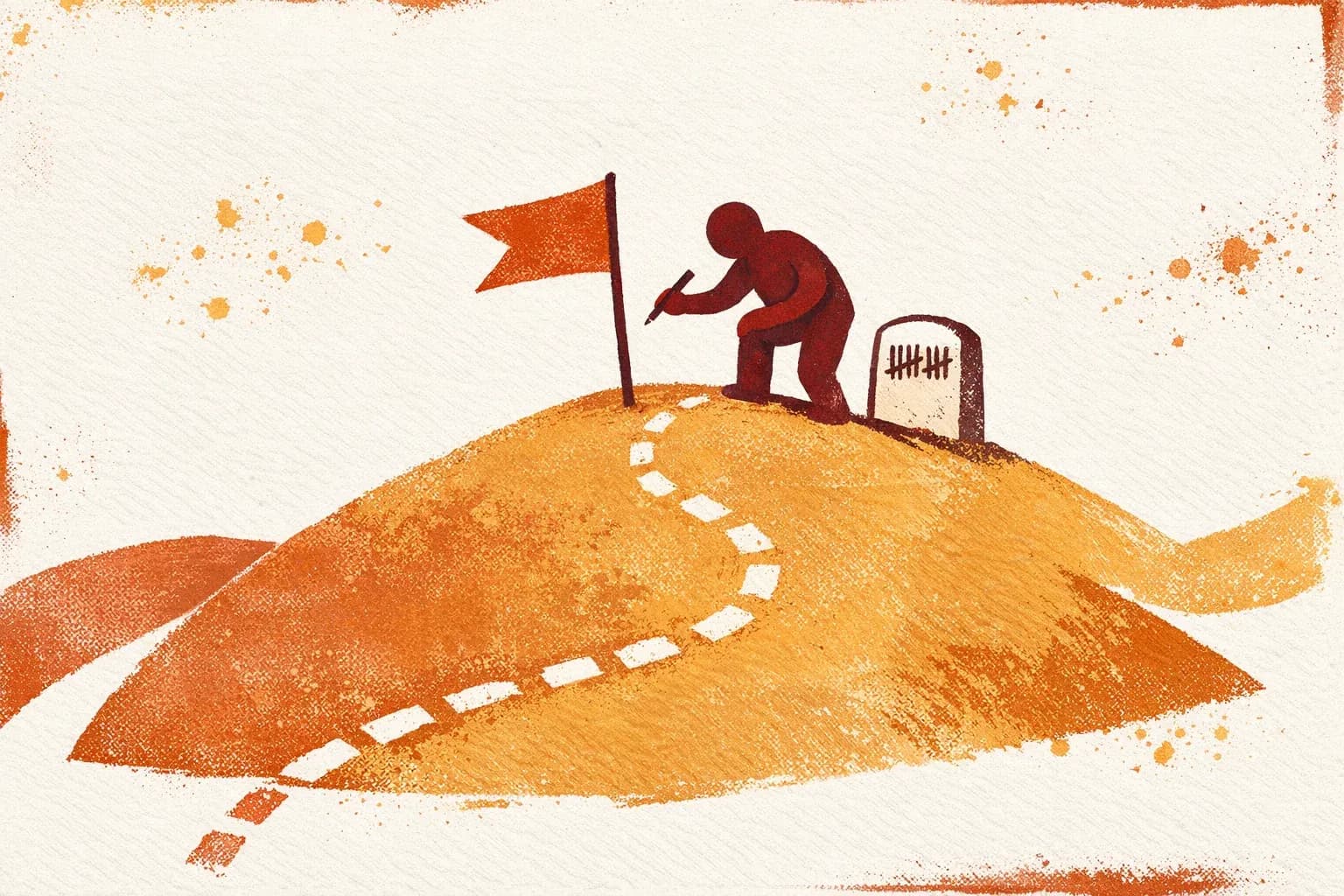
The reason most pivots feel like failures is that nobody wrote down what success looked like before they started. The experiment ran for four months, the numbers were ambiguous, the team got emotionally attached to the idea, and the decision to kill it became a referendum on the whole company rather than a normal closure of a specific bet.
Annie Duke's operator principle, which she applies mostly to poker but translates cleanly: establish kill criteria before you place the bet. Specific benchmarks, specific dates, and a specific action if the benchmarks aren't met.
The pre-mortem template
Before a seed-stage team starts an experiment — a new go-to-market channel, a feature, an ICP expansion — write four lines:
- Thesis: we believe X will produce Y because Z.
- Leading indicator: Y will be visible in [specific metric] by [specific date].
- Kill threshold: if [metric] is below [number] by [date], we stop.
- Action if we kill: who does what in the following seven days to wind this down cleanly.
That's forty minutes of work. The value comes not from what you write but from having to be specific. Most teams, when asked to name the leading indicator, realise they were going to run the experiment on vibes.
Why this works
When the metric misses by the date, the conversation becomes 'the experiment hit its kill threshold, we're winding it down' — which is operationally identical to 'the experiment succeeded, we're scaling it'. No emotion, no referendum, no identity spiral. Just the next thing.
Founders who run this process consistently produce twice the learning per quarter. Not because they're smarter, but because they've removed the sunk-cost tax that every un-killed experiment charges on the next decision.
The meta-rule
If you find yourself unable to write the kill criteria — if every threshold feels arbitrary and every date feels wrong — that's the signal you're not ready to run the experiment. Spend another week on the thesis. Or admit the experiment is actually a hope, and run a different one.
The hardest part of the pre-mortem isn't writing it. It's agreeing to honour it. If you can't agree to the kill in advance, don't agree to the launch.
Found this useful?
Thirty minutes. Free. No pitch deck.
If the diagnosis is clear without me, you go do it. If not, we talk about the sprint. Either way, the first call takes 30 minutes and costs nothing.
Book the callKeep reading
All posts
Busy is the enemy of progress
A good week isn't measured in standups attended or features shipped. It's measured in hard decisions made. Founders who confuse activity for momentum burn runway without ever finding out what's true.

The week you should have stopped building
Pre-Series-A companies usually have either a distribution problem or a product problem. Rarely both. The one you don't have is the one you keep working on.

Distraction has a CRM — it's called LinkedIn
Graham was right that competition doesn't kill startups — distraction does. What he didn't say: distraction in 2026 has an interface, a notification schedule, and a search function. It's called LinkedIn.